The Journal · Speed-to-Lead
Speed to lead: what you do in the first 15 minutes.
By Ruth Rivera · August 21, 2026
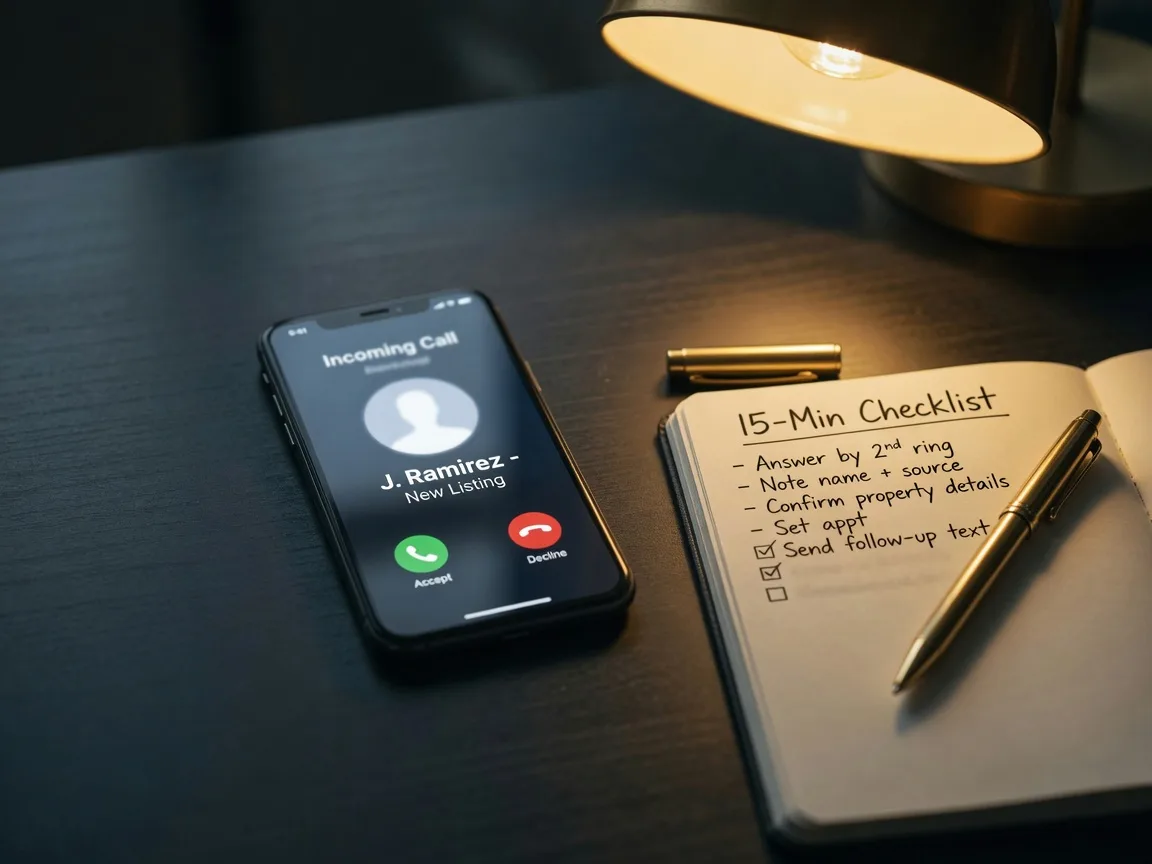
The window that decides the week
Reach out, call, be reachable
The first fifteen minutes after a lead comes in are the most valuable minutes in a real estate career, and most of them get spent on everything but the lead. This post is about the opening move: what I do in those first fifteen minutes, why that window carries so much weight, and why speed is a decision you make before the lead ever arrives.
I am keeping this article to the opening sequence on purpose, because the opening move deserves its own focus. The full week-long system lives in its own article, and I will point you to it at the end.
The window that decides the week
A name arrives with living intent: a person thinking about a move, ready to talk. That intent has a shelf life, and the first fifteen minutes are the most perishable part of it. The conversation is not won by the most experienced agent. It is won by the agent who shows up first.
I have watched buyers sign with the agent who answered fast instead of the agent who answered best, and it is not because people are impatient. It is because fast says something about you: you are organized, you are responsive, you have a process. The lead does not know your resume yet. They know whether you showed up, and they judge the whole relationship on that first impression.
The opening sequence: reach out, call, be reachable
Here is the opening move, and it is simpler than agents think it needs to be. Reach out immediately: send your contact information the moment the name comes in, your phone number and your email address in the first lines, so the lead can reach you directly no matter what happens next.
Make the call: pick up the phone and call before the first message has cooled, and if you reach voicemail, leave a warm, specific message that references what you sent. Be reachable: keep the phone on you for the hours that follow, and answer when they call back. Email, call, text: the three doors are open, and all three point back to your contact information already in their hands. The sequence is not complicated. It is urgent, and the urgency is the point.
What speed actually says to the lead
Speed is not panic. It is respect. When you answer in minutes, you tell the lead their business matters to you right now, not when your calendar opens up. Most agents stay silent for hours or days, and in that silence the lead keeps looking.
The agent who answers first does not just get the call. They get the benefit of the doubt, the first showing, the first offer conversation, every small advantage that compounds into the client. Speed does not do the whole job. Speed earns you the right to do the job at all.
What waiting costs
Waiting has a real price. I have seen the same pattern for thirty years: a lead comes in, the agent is busy, the call moves to tomorrow, and by tomorrow the lead has already heard from someone else, or worse, has already booked a showing. The lead did not reject you. They simply never heard from you until it was too late.
A lead is not a file you get to when you can. A lead is a person waiting to be chosen, and they will almost always choose the person who chose them first. The agents who lose these deals rarely lose them on price or on market knowledge. They lose them on the calendar, one quiet hour at a time.
Then the week does the rest
The opening move opens the door; the week walks through it. Once you have made first contact in those fifteen minutes, the full system takes over: the questions that place the lead in the right bucket, the content that matches where they are, and the rhythm that keeps the relationship warm for seven days. I wrote the whole sequence in Speed to Lead: The 7-Day System for New Inbound Leads, and I recommend reading them together: the first fifteen minutes win the conversation, and the seven days win the client.
Answer first, then be worth answering
Speed earns you the right to be heard. What you say next is what makes you worth choosing, and that is where the 8 Bucket System does its work: every answer the lead gives you tells you which bucket they belong in, and every bucket tells you what to say next. The first fifteen minutes are the start of a system, not the whole of it. Not by chance. By design.